
Essentium PCTG Review
PCTG isn't polycarbonate. It takes 24 kJ/m² on the notched impact test, way past PETG and up with ABS, but it goes soft at 80 °C and layer strength is modest.
TL;DRthe short version
- PCTG has nothing to do with polycarbonate. Like PETG it's a glycol modified copolyester, sold on better impact strength, more gloss and near-perfect layer adhesion.
- Essentium's sells for $40 per 750 g spool in the US, so $53 per kilo, while Fiberlogy's comes in at 36 € per kilo in Europe. Not cheap, but reasonable for an engineering material, and the datasheet even includes drying instructions.
- It wants around 270 °C, so an all-metal hotend is mandatory; anything PTFE lined will give you a bad time. I settled on 270 °C with 30% fan, printing out of a drybox onto powder-coated PEI at 85 °C.
- Print quality lands at the level of a good PETG with more gloss: overhangs clean down to 75°, bridges almost flawless up to 100 mm, and an almost perfect 3DBenchy.
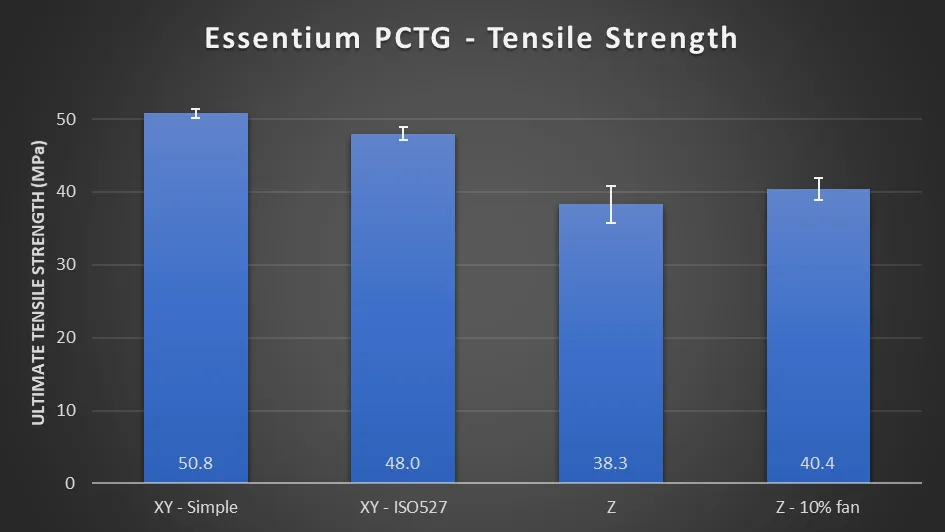
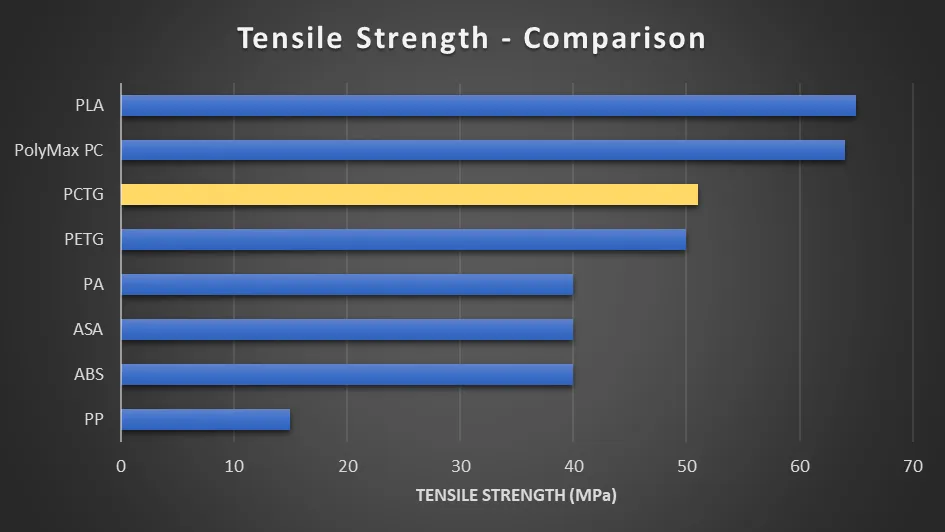
- Tensile strength was 48 to 51 MPa flat, with heavy yielding and necking, so it fails far more predictably than PLA.
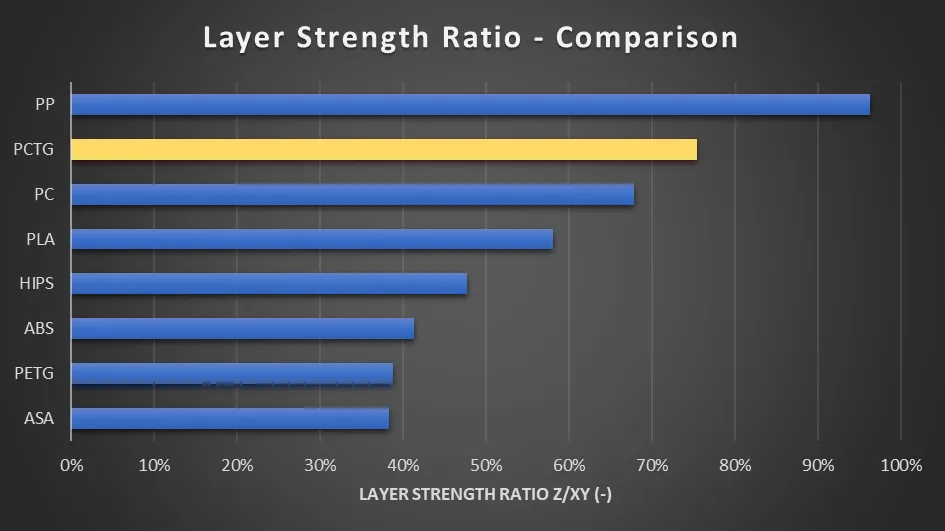
- Layer adhesion is the standout: 38 MPa standing, 40 MPa with cooling down at 10%, which is about 75% of the flat strength and one of the best ratios I have ever measured.
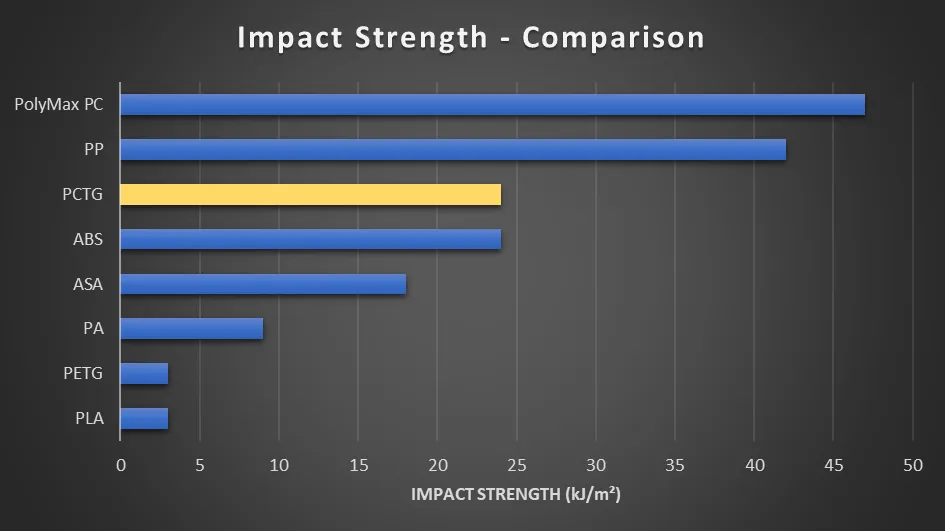
- Impact strength is the other win at 24 kJ/m² notched, way past PLA and PETG and on the level of ABS, though standing samples collapse to 1.5 kJ/m², like most polymers.
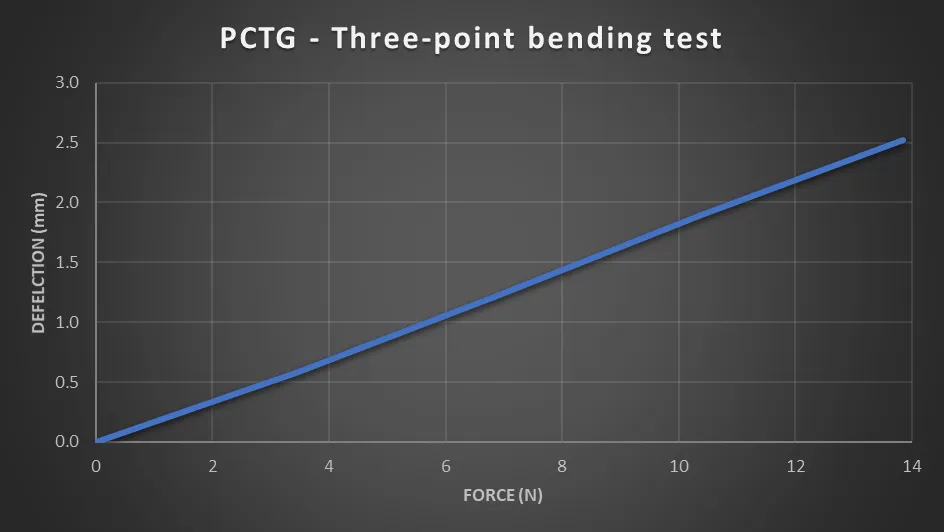
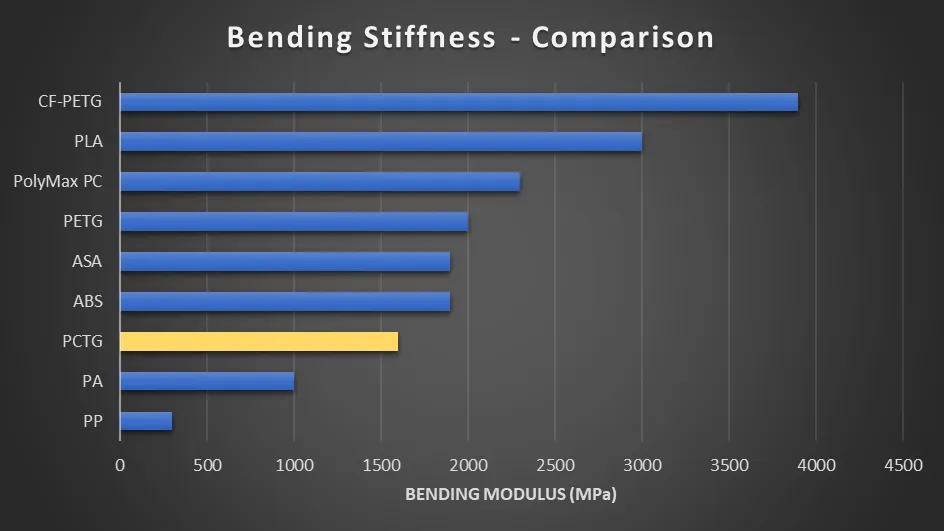
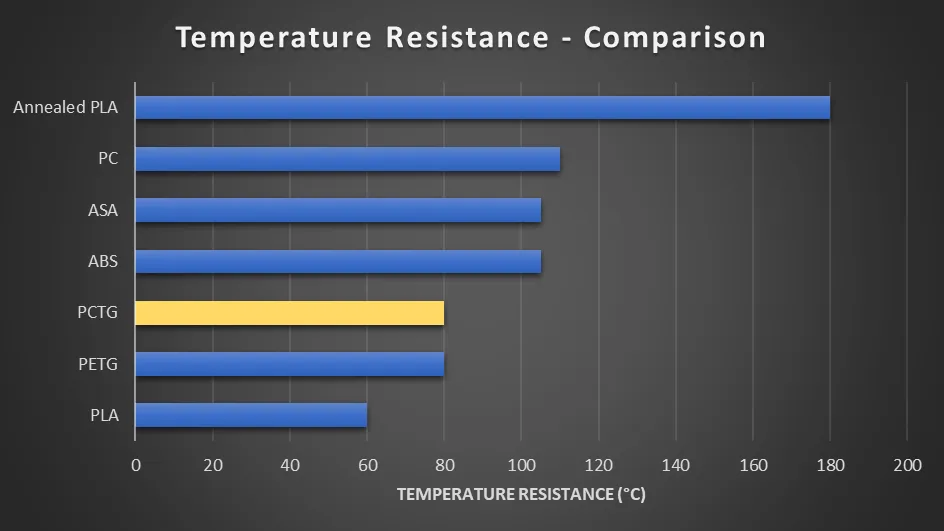
- It's soft at 1600 MPa bending modulus and goes soft at 80 °C, the same as PETG, so it isn't the wonder material some claim. But it is in almost every way a better PETG at a reasonable price: keep it dry, print it hot, and use as little cooling as you can get away with.
First things first: PCTG doesn’t have anything to do with Polycarbonate. If you’re interested in Polycarbonate or Polycarbonate blends, make sure to be subscribed because I’ve got reviews of Prusa*’s PCBlend and the even cooler Carbon Fiber PCBlend coming up!
What PCTG actually is
PCTG in its full, written form is hard to pronounce but it’s similarly to PETG and also a glycol modified Copolyester for better printability and material performance. It claims to be an alternative to PETG only with better impact strength, surface gloss, and for me, more importantly, almost perfect layer adhesion, and this is also why I was approached by so many to test this material. And this is exactly what I did! We’ll take a look at print quality, tensile strength, stiffness, impact resistance, and thermal resistance to find out if the claims hold true and if this material is something you should consider for your next project!
Essentium sent me two rolls of their PCTG to try out because I wasn’t able to find their material here in Germany. It sells for $40 for a 750g spool in the US*, which makes $53 per kilo. Therefore, it’s not a super cheap material but definitely more affordable than other engineering materials. If you want to buy PCTG filament in Europe, check out Fiberlogy PCTG filament* that also even comes cheaper at a very competitive price of 36€ per kilo. Since each of the manufacturers might use different grades of raw material, I unfortunately can’t tell if they will perform exactly the same but just looking at the datasheets they do seem very similar. Speaking of datasheets, I was really happy to see that Essentium provided a proper one that even includes drying instructions!
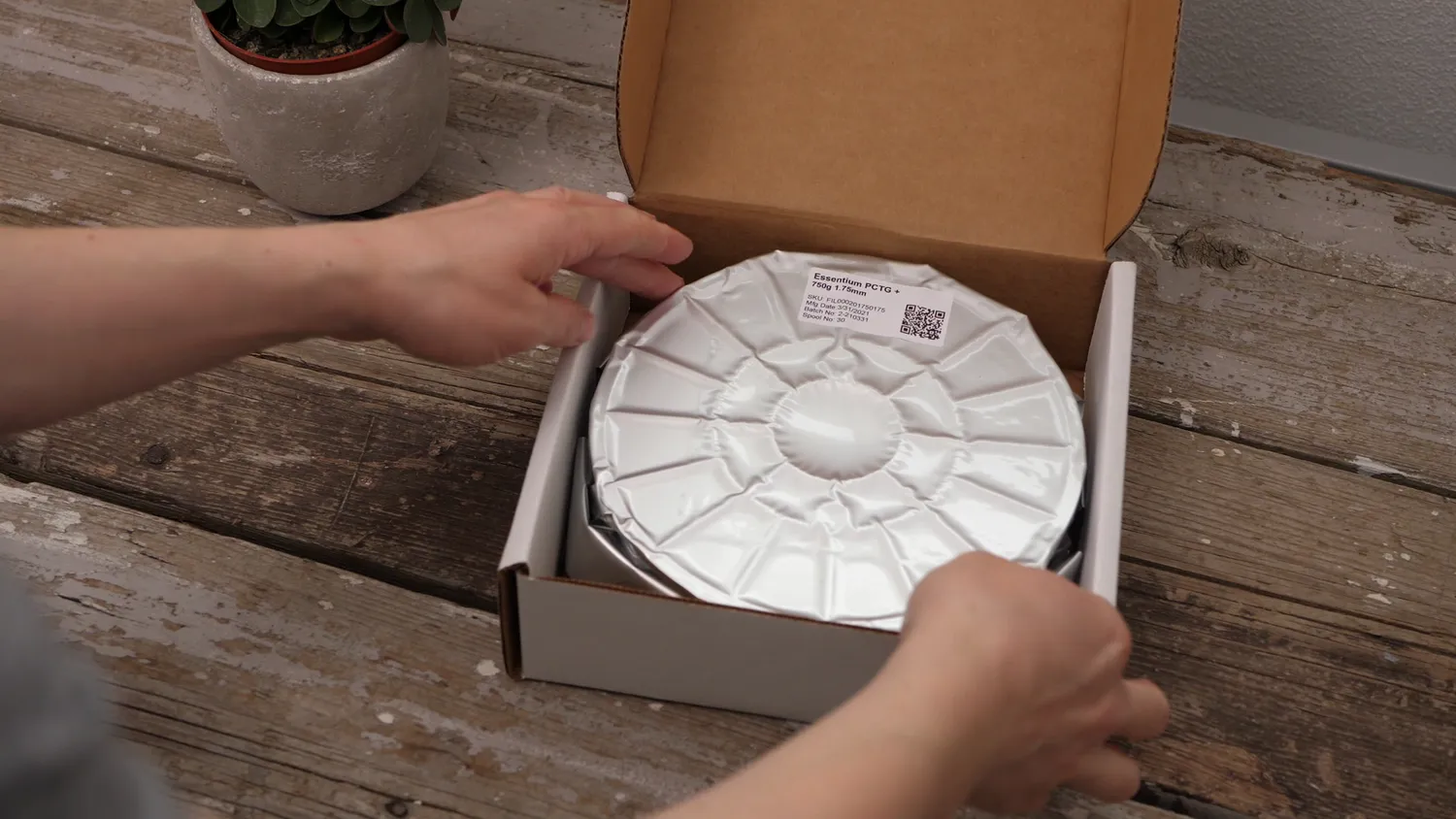
Their PCTG comes sealed in a nice Mylar bag because the material seems susceptible to moisture. Only those metalized plastic bags will really hold back the moisture during shipping and storing. I directly transferred the spool into one of my dry-boxes, out of which I printed all of the parts to avoid moisture uptake. I used the clear natural color for all mechanical tests, though they also sell this material in black and white.
Dialling in the settings
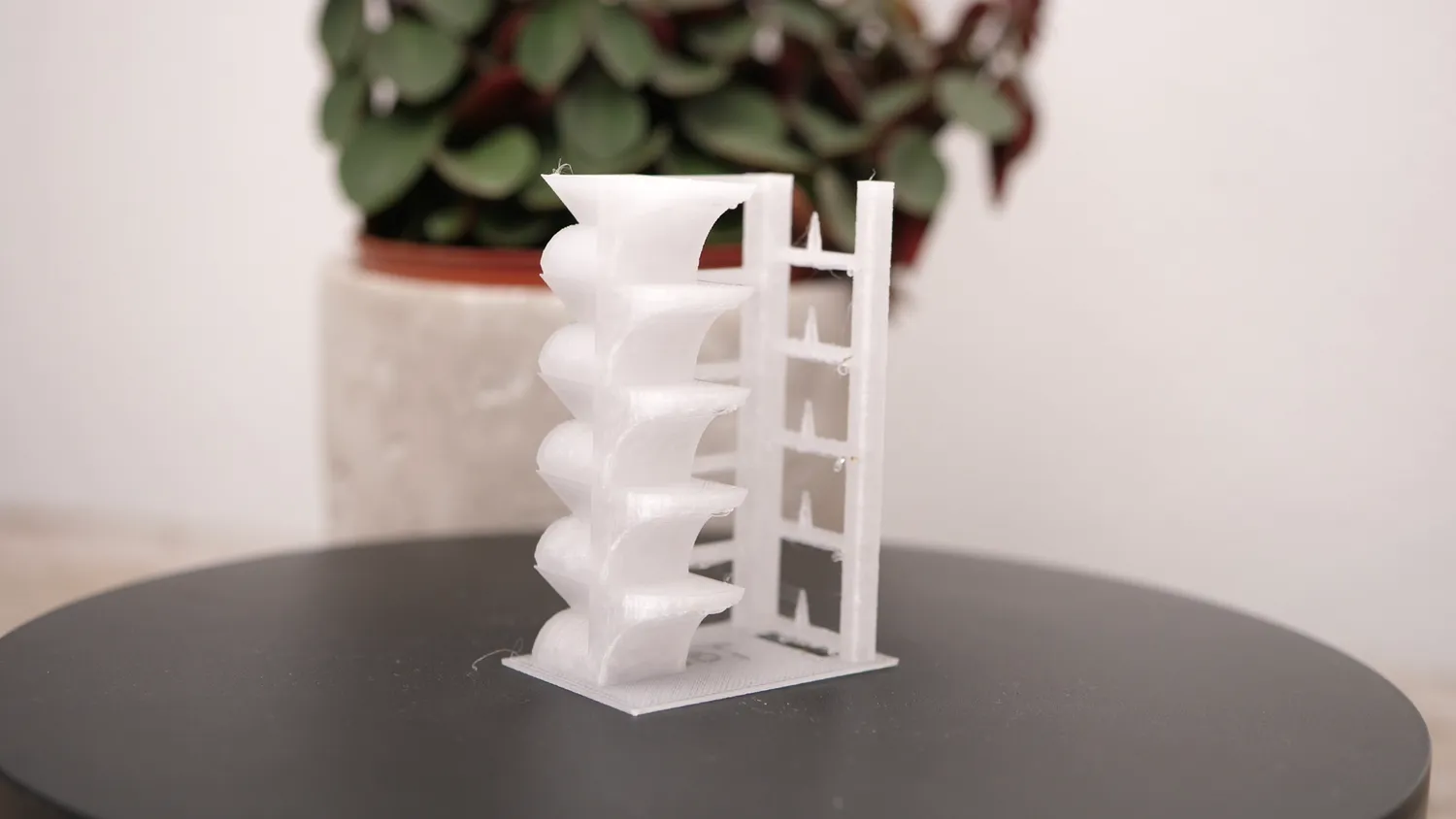
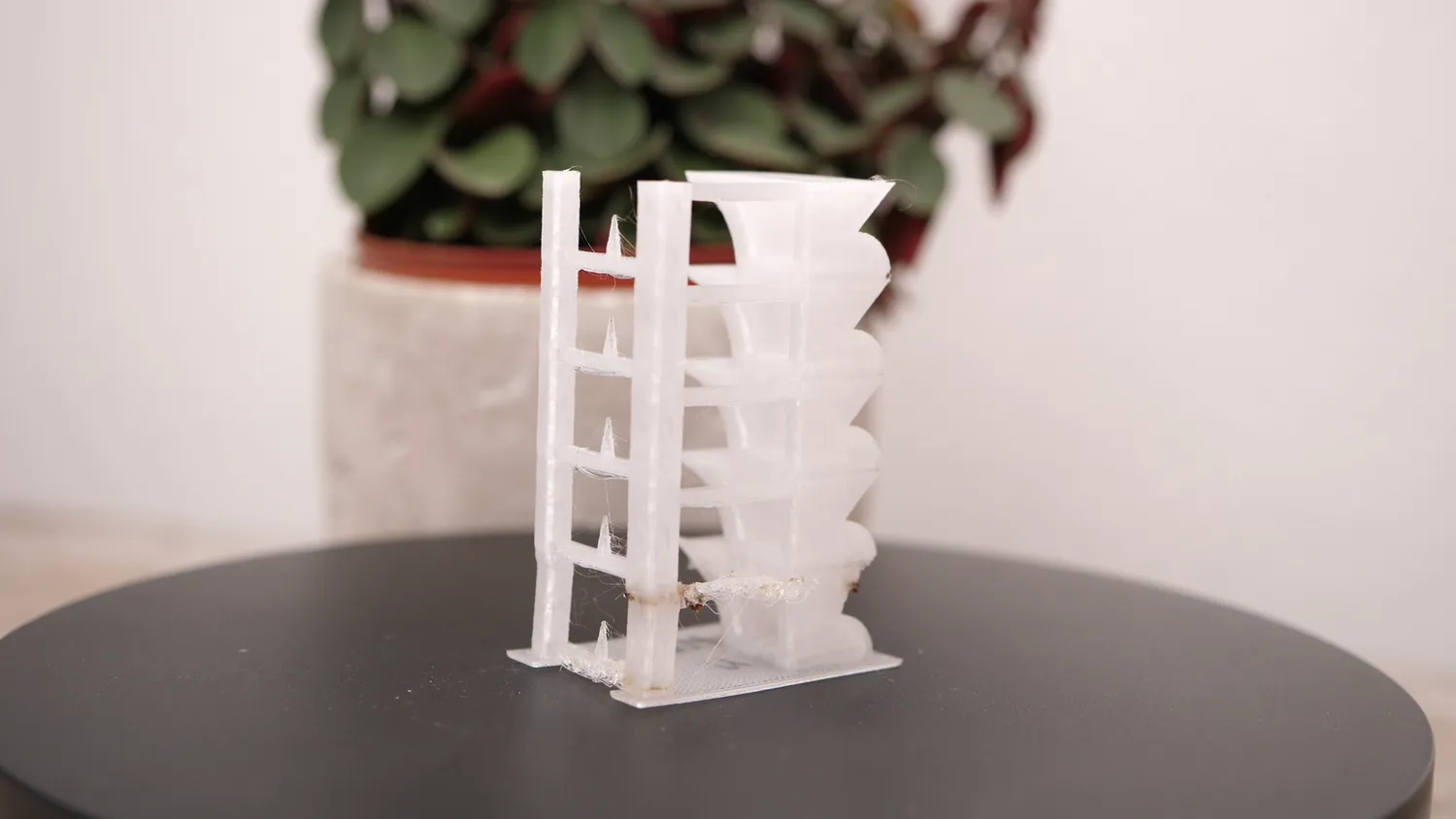
I started with my general print settings test and printed 100% infill boxes on supports to find the right extrusion amount. Then I printed Joe’s temperature test tower two times. On one, I varied the fan speed from 0 to 100%, keeping the extrusion temperature in the middle of the recommended temperature range. On the other, I varied extrusion temperatures between 280°C to 240°C while keeping the fan speed constant. I first tried printing on glue stick covered PEI, which didn’t work perfectly though switching to directly printing on powder coated PEI did the trick, and parts held firmly on the plate using bed temperatures of 85°C and released easily after cooling down. Essentium PCTG prints without any smell, though especially due to the high extrusion temperatures, I can only recommended to print it in a well-ventilated area. An extrusion factor of 1.0 seemed to provide very nice results with no under or over-extrusion.
PCTG seems to need at least a minimum amount of cooling if you have bridges and overhangs because with no cooling fan at all, the results looked horrible. Starting at 25% fan, the print quality became nicer and nicer. Print quality for an engineering material is not everything, so what I tend to do when printing these towers is that I break the spikes to get an impression about layer strength. Without fan and even with 25% cooling, the spike only bent but didn’t break, which already speaks for its layer strength. The more cooling, the easier it was to break the spikes off. The temperature variation tower showed very similar results in the whole temperature range with a bit more stringing at higher temperatures and a slightly matte surface at lower temperatures. The spikes printed at 280°C and 270°C again only just bent. The lower I went, the easier it was to break them off, so printing hot seems to be necessary for high strength. Looking at these extrusion temperatures already shown us one challenge with this material. Due to its requirements in nozzle temperature, I highly suggest using this material only with an all-metal hotend. Anything PTFE lined will give you a bad time pretty soon. In the end, I settled with 270°C on the nozzle and 30% cooling fan for the rest of my test prints.
Print quality
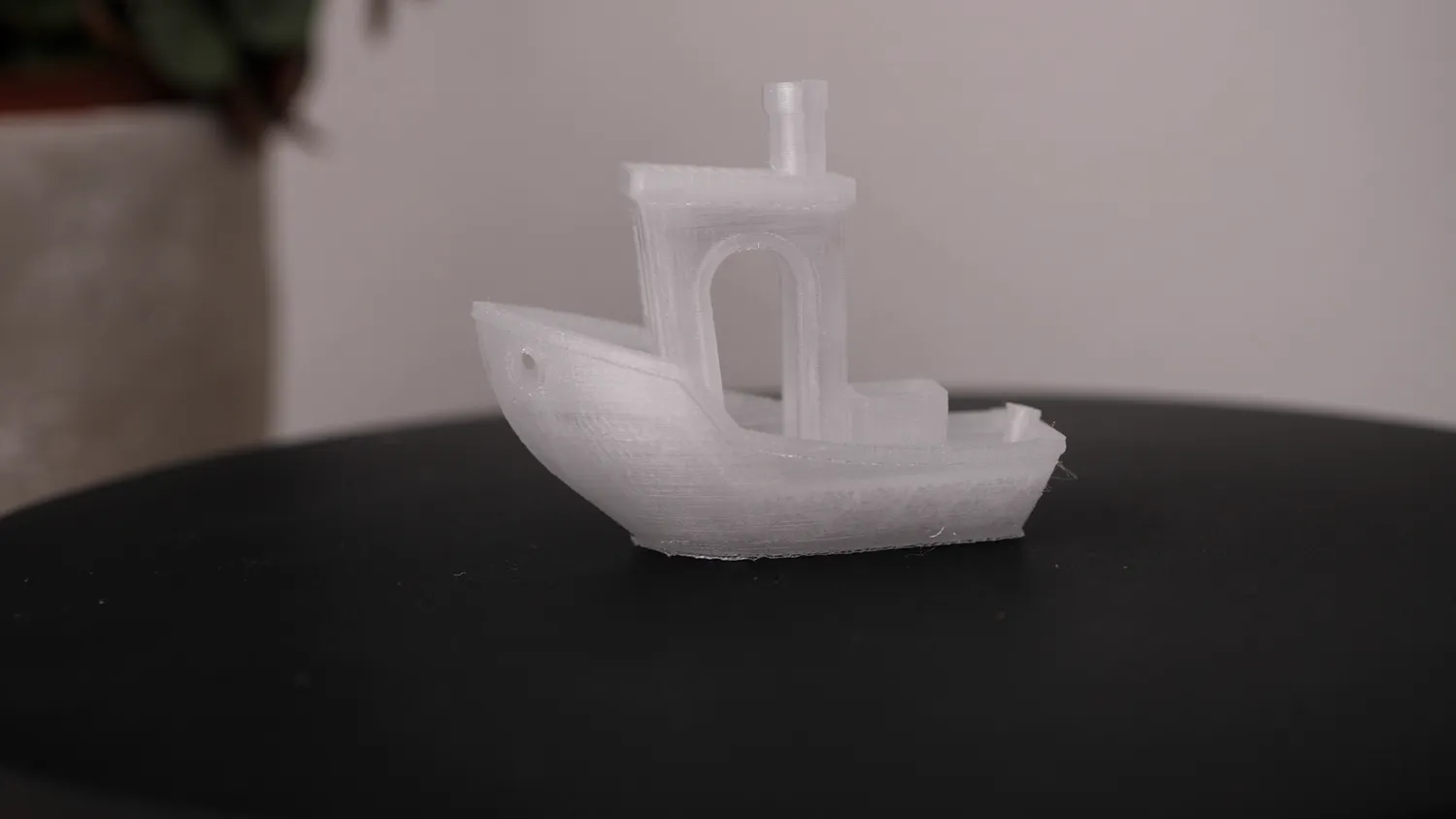
Using these settings, I printed a bunch of quality test parts. Overhangs looked great and only showed some artifacts at a 75° angle. The stringing test looked nice with just a bit of tiny hairs and even small details came out nicely. Bridges were very impressive and printed almost flawlessly up to the biggest gap of 100mm. This all resulted in an almost perfect 3DBenchy with very nice and shiny surfaces and good detail reproduction. So in terms of print quality on a very similar level as a good spool of PETG with a bit more gloss and with hopefully better mechanical strength. Also, the other parts I printed came out very nice and shiny and shows the materials’ visual appeal!
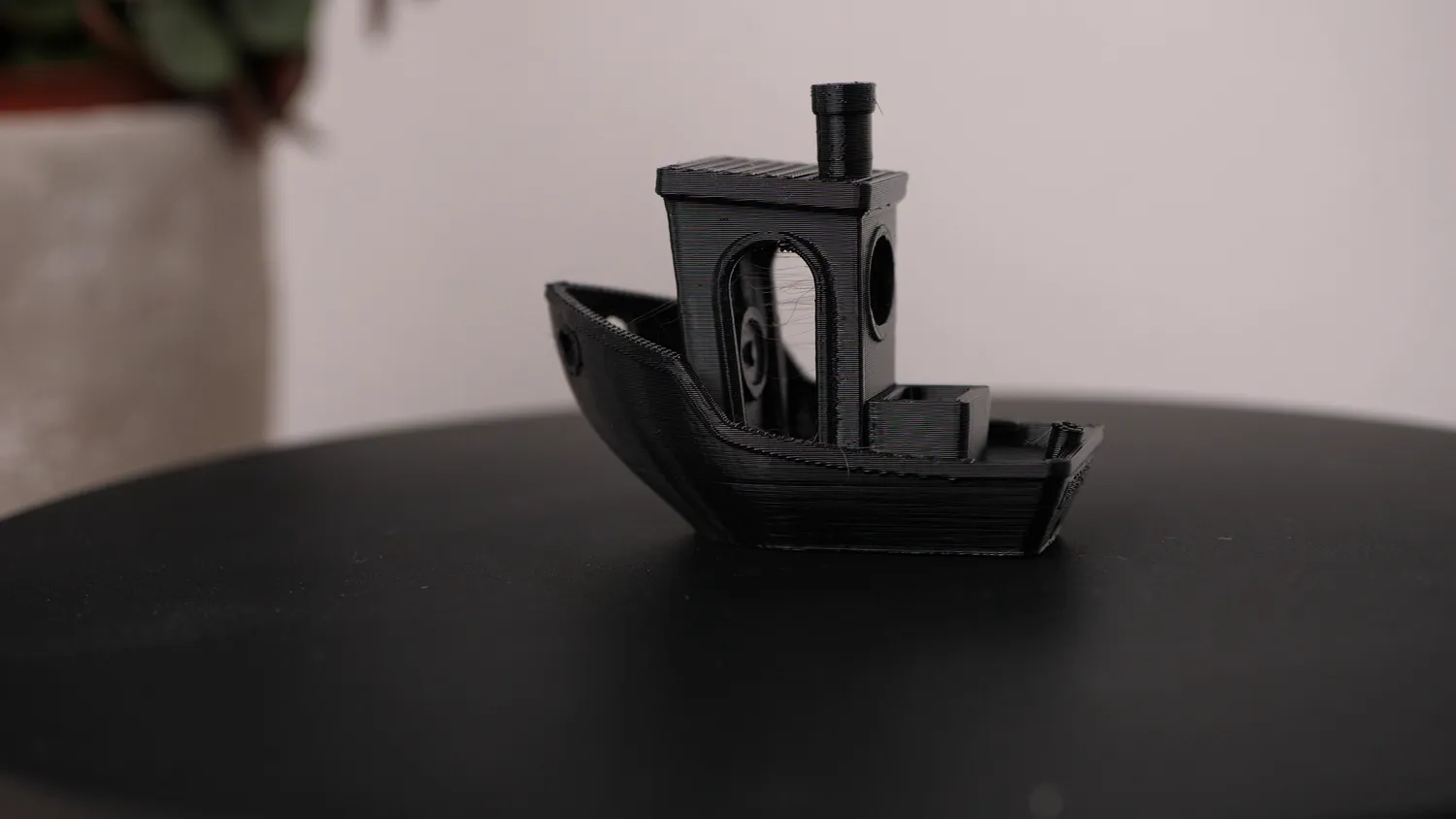
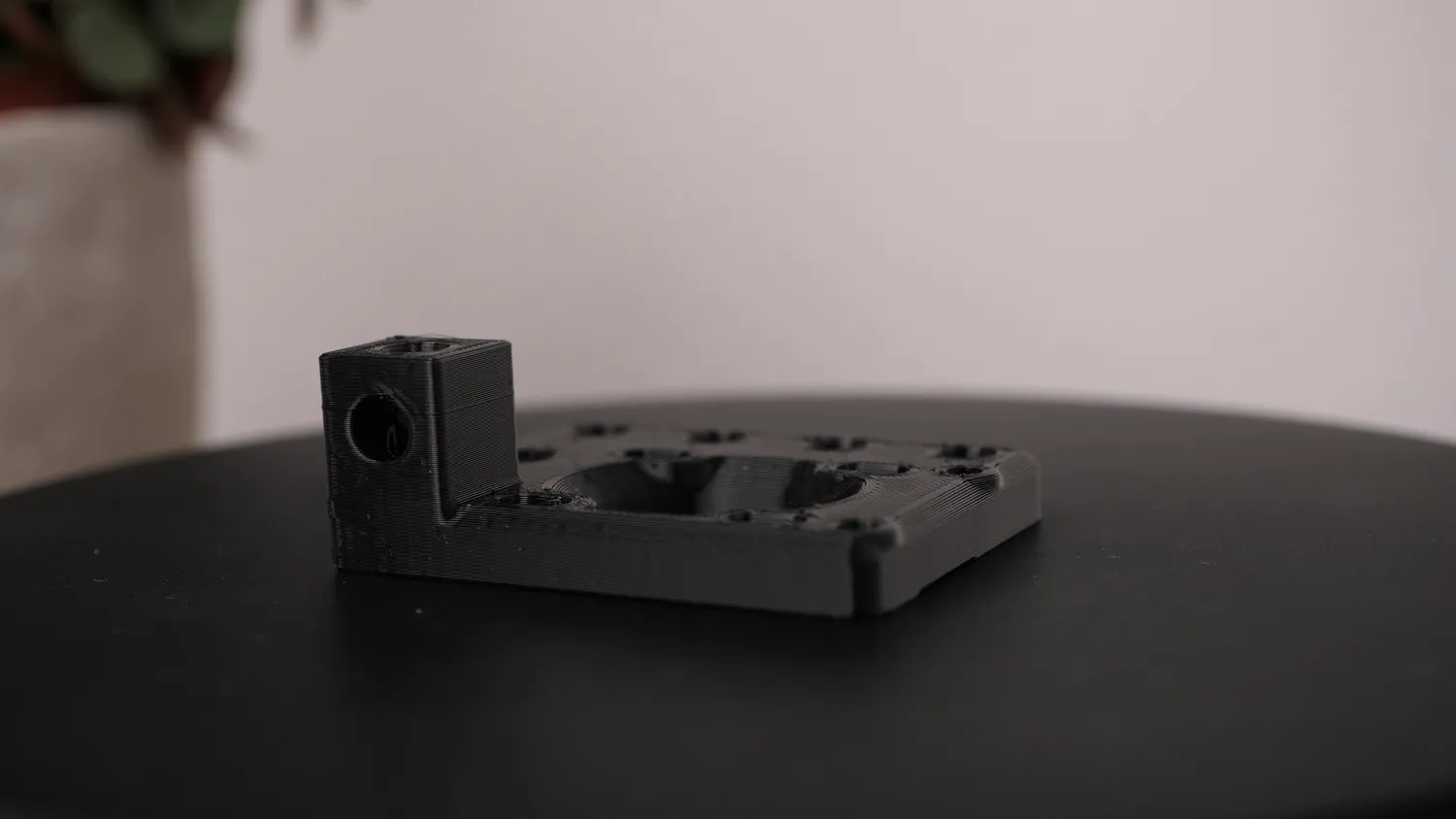
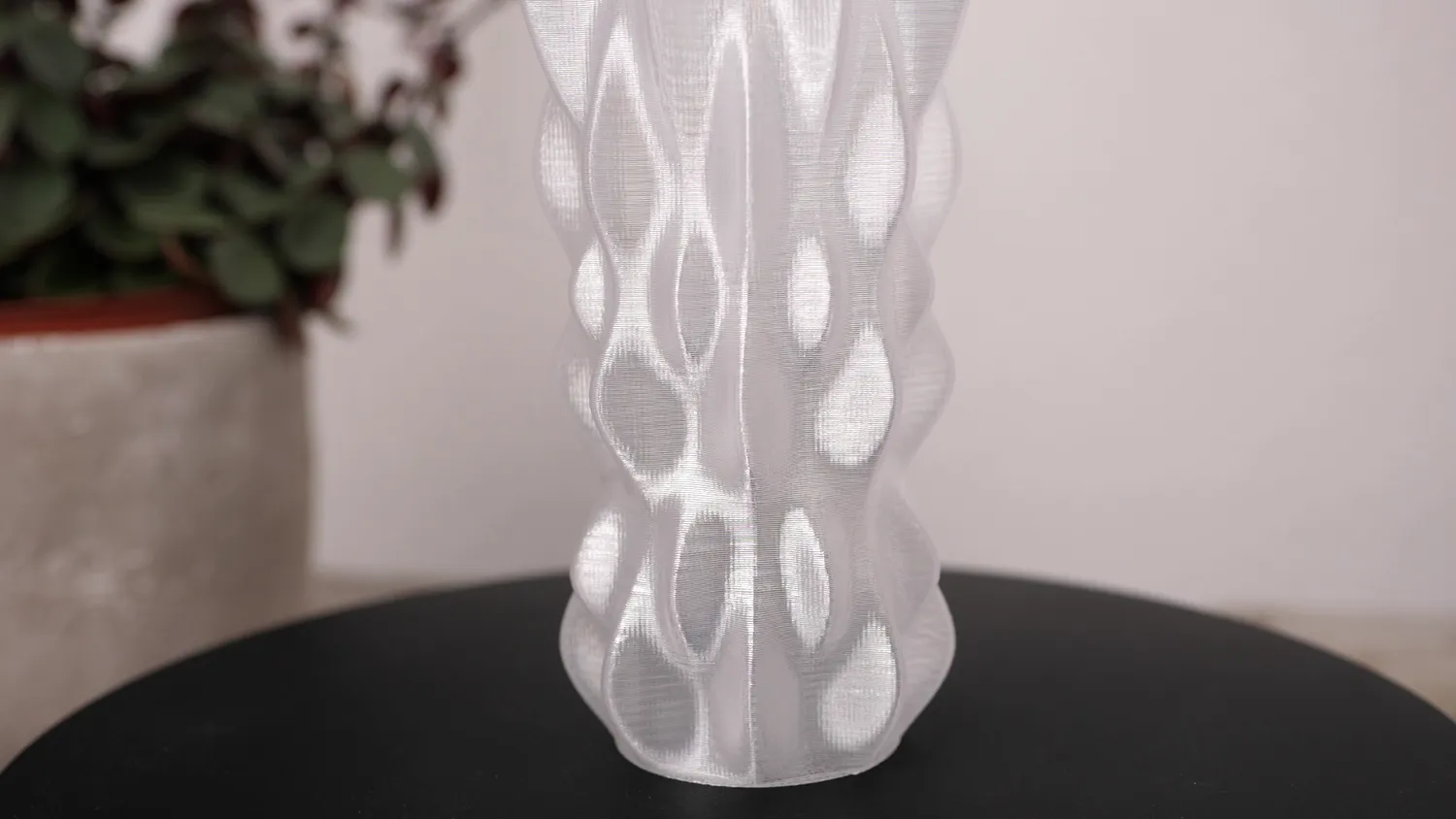
The strength test parts were all printed in my office at around 22°C without any enclosure. The materials hardly warped, and I was able to even print these big samples without them lifting from the print platform even not using a brim.
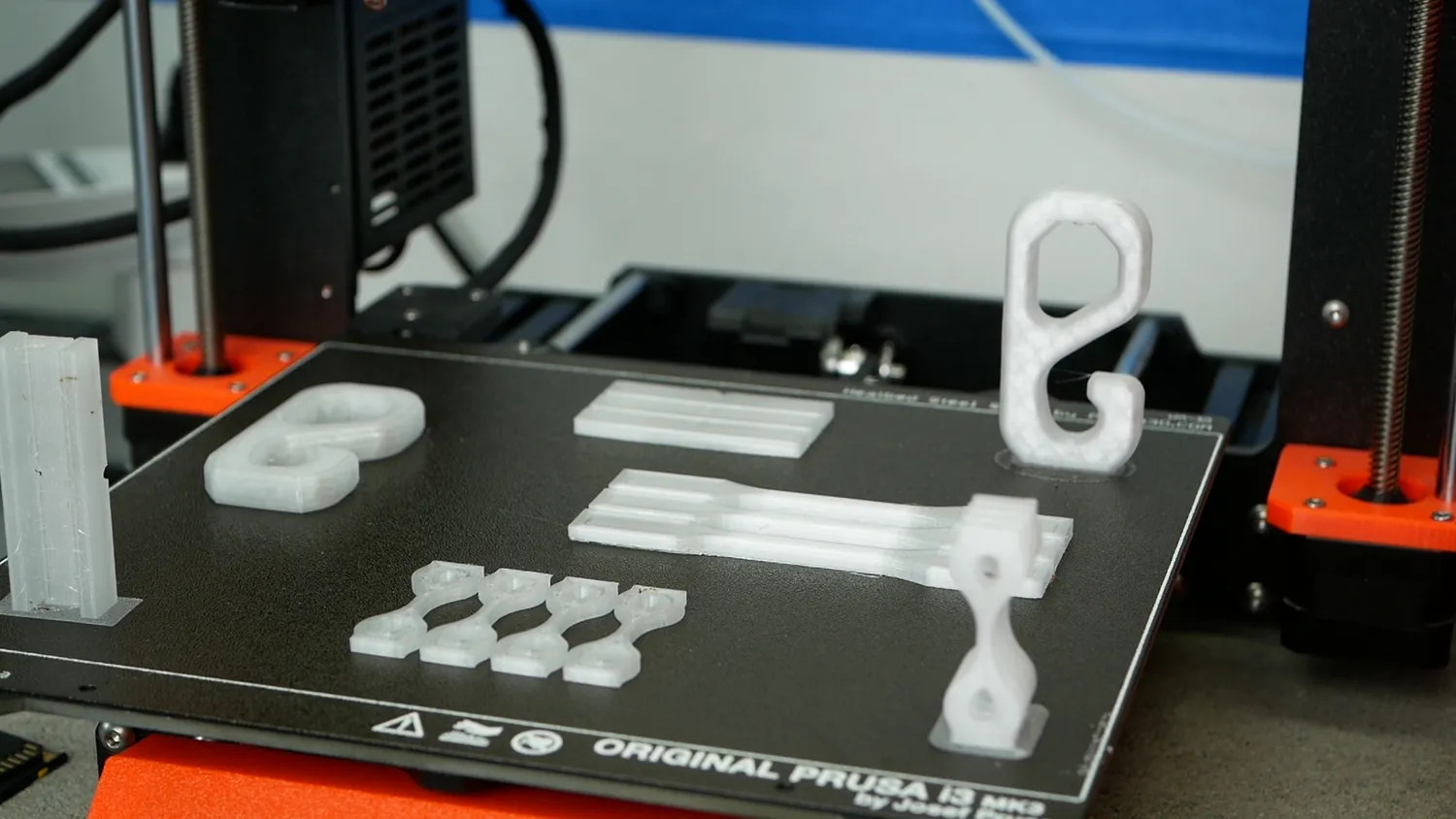
Bed of test samples
Tensile strength and layer adhesion
Let’s start with tensile strength. If you’re by the way interested in the full test reports, they are available for my Patrons! For the samples printed flat, I tested standard dogbone samples as well as my mini specimens. Both showed very similar results, and the PCTG was able to bear around 48 to 51 MPa of stress until it severely started yielding. The way the material is necking shows that it’s very ductile and will not break as unpredictably as, for example, regular PLA.
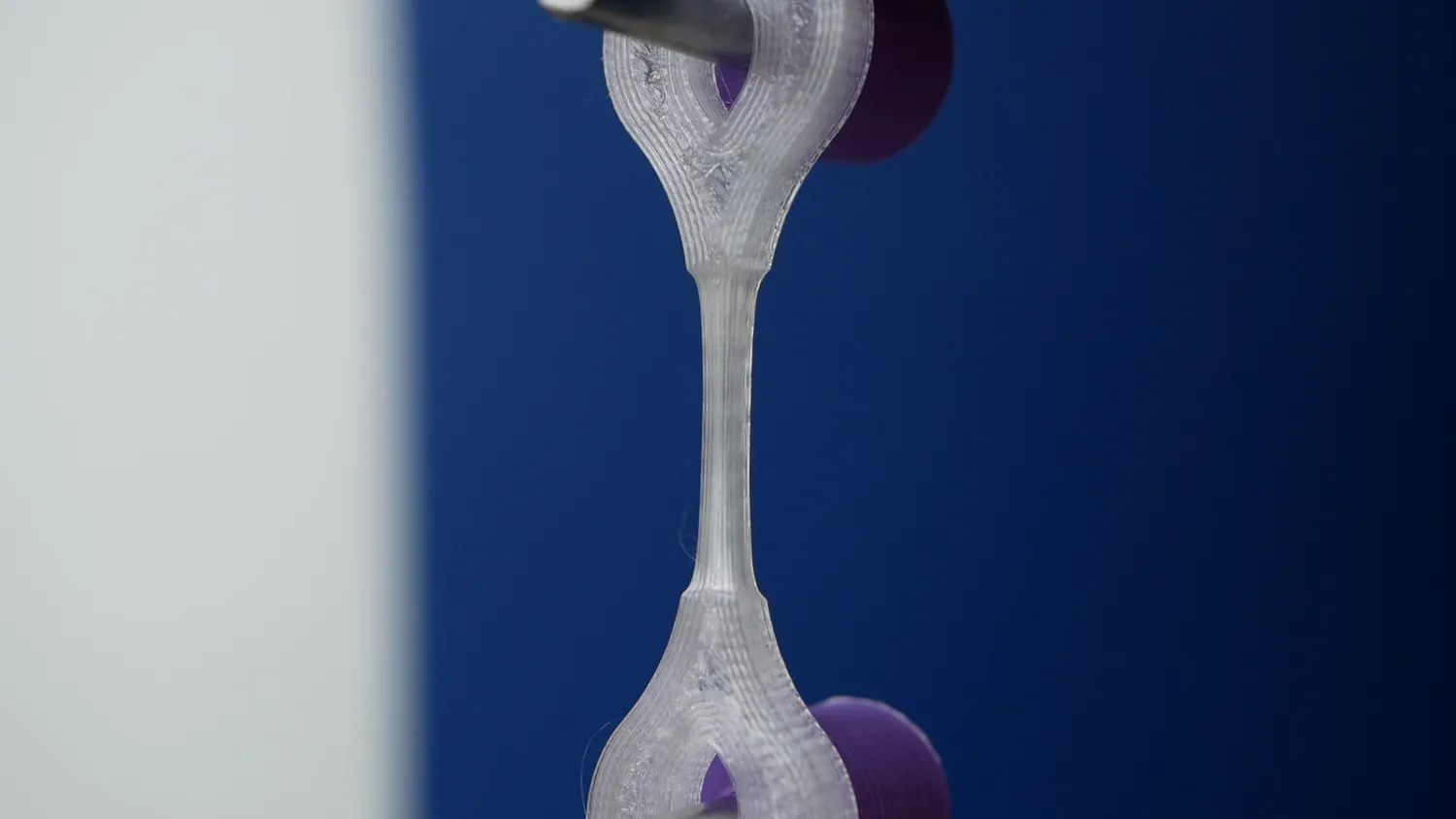
Tensile sample shortly before rupture
Comparing that value to other materials shows that it’s definitely not the strongest but well in the range of what you’d also expect from PETG. Where it gets interesting is when we take a look at layer adhesion so, when we test samples that were printed standing. Just bending one of these samples by hand shows that they don’t simply break between the layers but nicely yield. Unfortunately, if we take a look at the raw numbers, we can see that the samples printed standing didn’t yield that nicely and were at least a little weaker than the ones printed flat. With 38 MPa layer strength, they still have one of the best layer adhesion ratios I’ve ever tested.
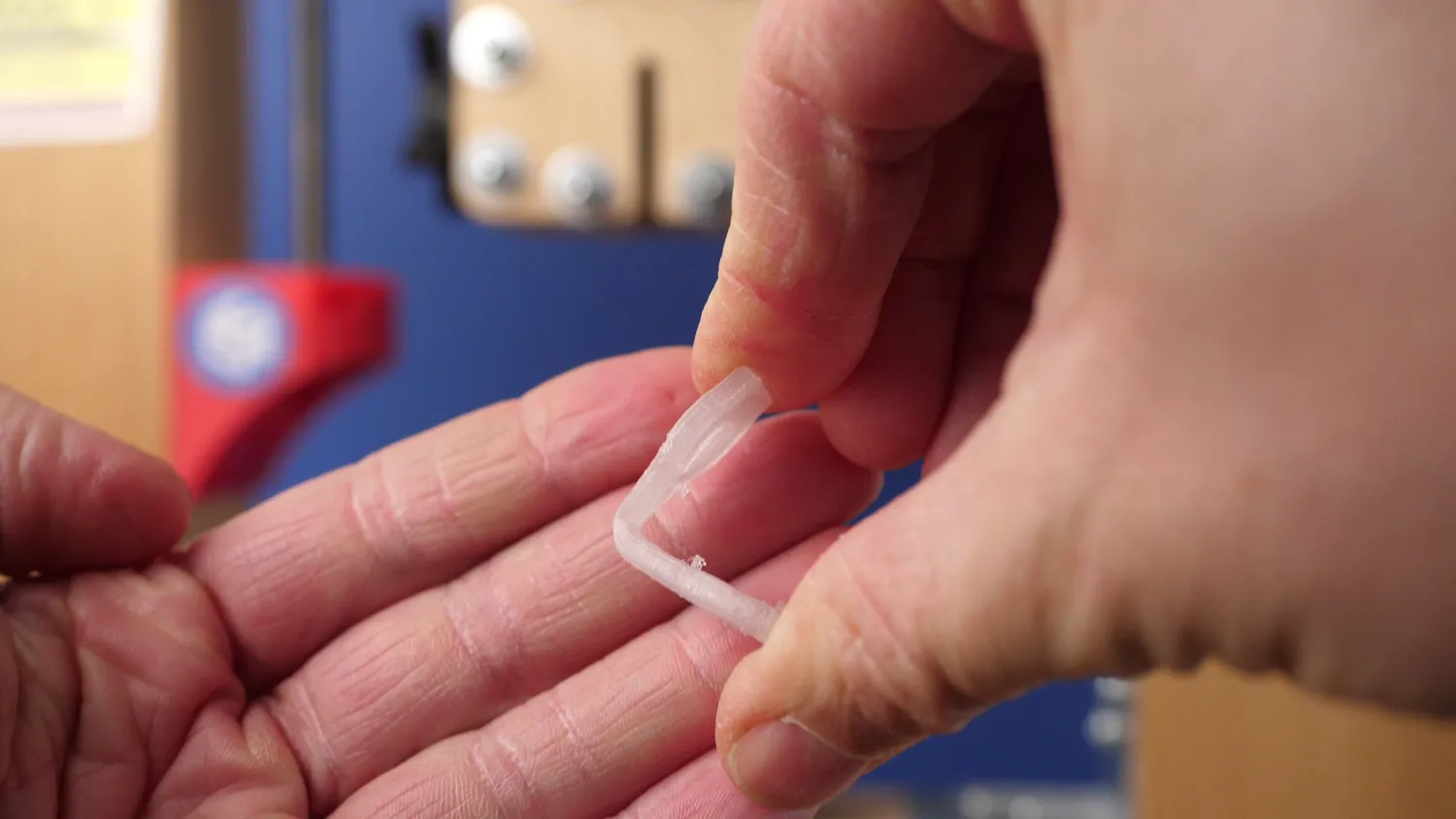
Bent layer adhesion sample
I even gave it a second chance and printed samples with only 10% part cooling instead of 30%. Here the strength increased slightly but I still was only able to improve the layer adhesion strength to 40 MPa.
Stiffness and the hook test
Next I tested the bending stiffness of Essentiums PCTG by loading a testbar with increasing weights on my 3-point-bending rig and noted down the deformation. With 1600 MPa it’s a rather soft material in-between Nylon and ABS or PETG, so not the best choice for applications where you need rigidity.
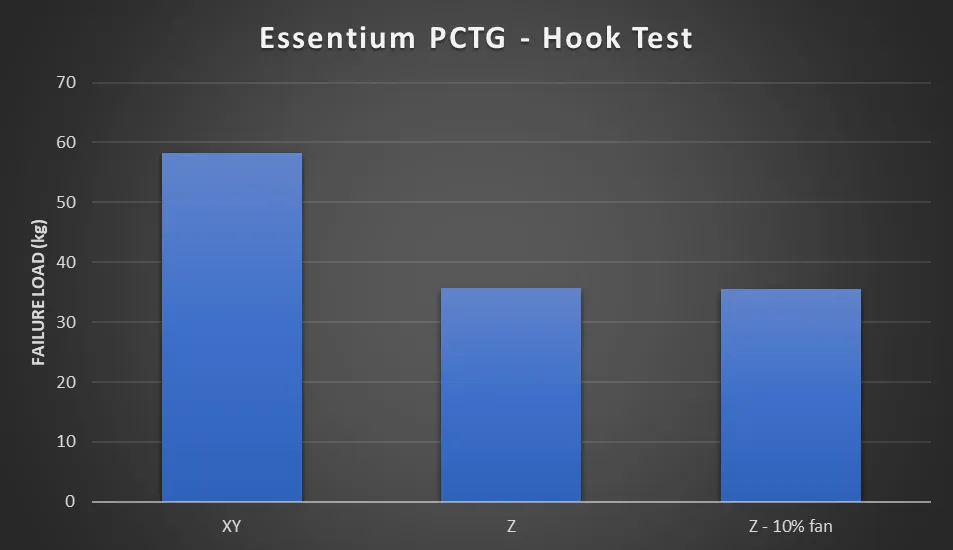
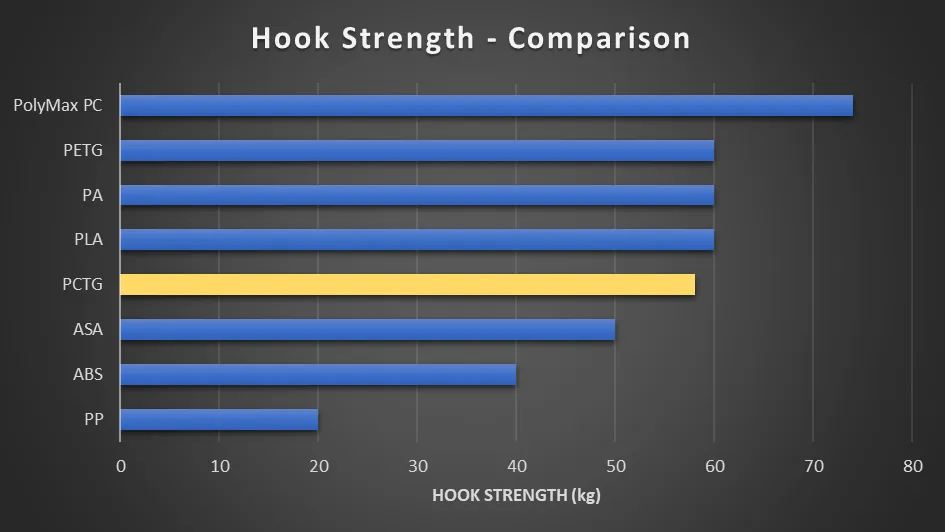
My test hook is representing a more realistic part with a combined loadcase of bending and tension. The hook that was printed flat failed at 58 kg but didn’t just rip and nicely yielded. The hook I printed standing failed significantly lower at only 36 kg which is the same load level where also the other sample failed that was printed with only 10% part cooling. This again shows that the material properties are not isotropic though layer adhesion is still better than with many other filaments. Turning part cooling totally off might improve strength even further but might result in severe degradation of quality.
Impact and temperature resistance
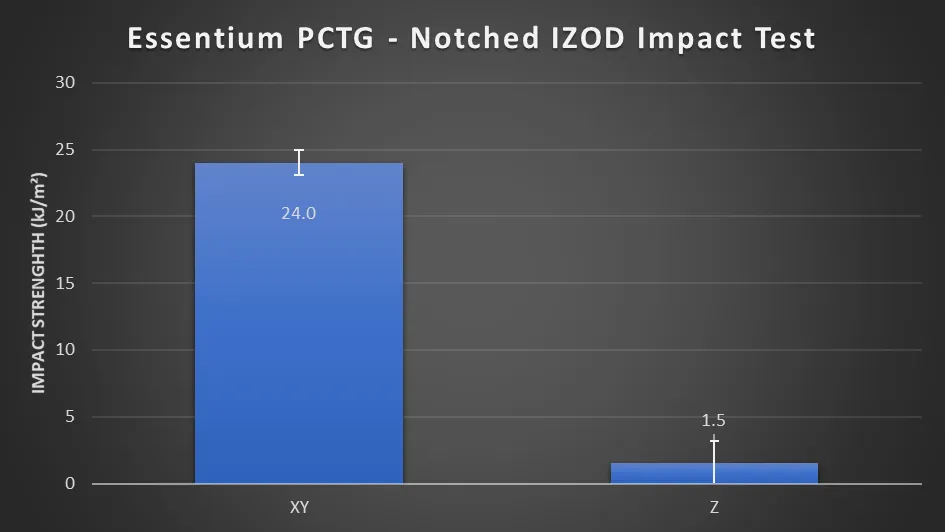
Next we get to impact strength which is a property many are not aware, that is kind of bad for PETG. PCTG was able to really shine here and the notched samples were able to absorb around 24 kJ/m² which puts it way above PLA and PETG and on a similar level as for example ABS. Unfortunately, the samples printed standing performed way worse and had an impact strength of only 1.5 kJ/m² on average. Similar to most other polymers in such a situation but again just shown that this is still not the perfect 3D printing material.
Finally let’s take a look at the temperature resistance of this material. For that test I put a bar which is loaded in the middle into my oven and gradually increased the temperature. At 80 °C it became soft and then totally failed just a couple of degrees above. Comparing that to other materials it’s very similar to PETG and should therefore also be able to cope with the temperatures on a hot day though I would have somehow expected more due to the necessary high printing temperatures of around 270°C.
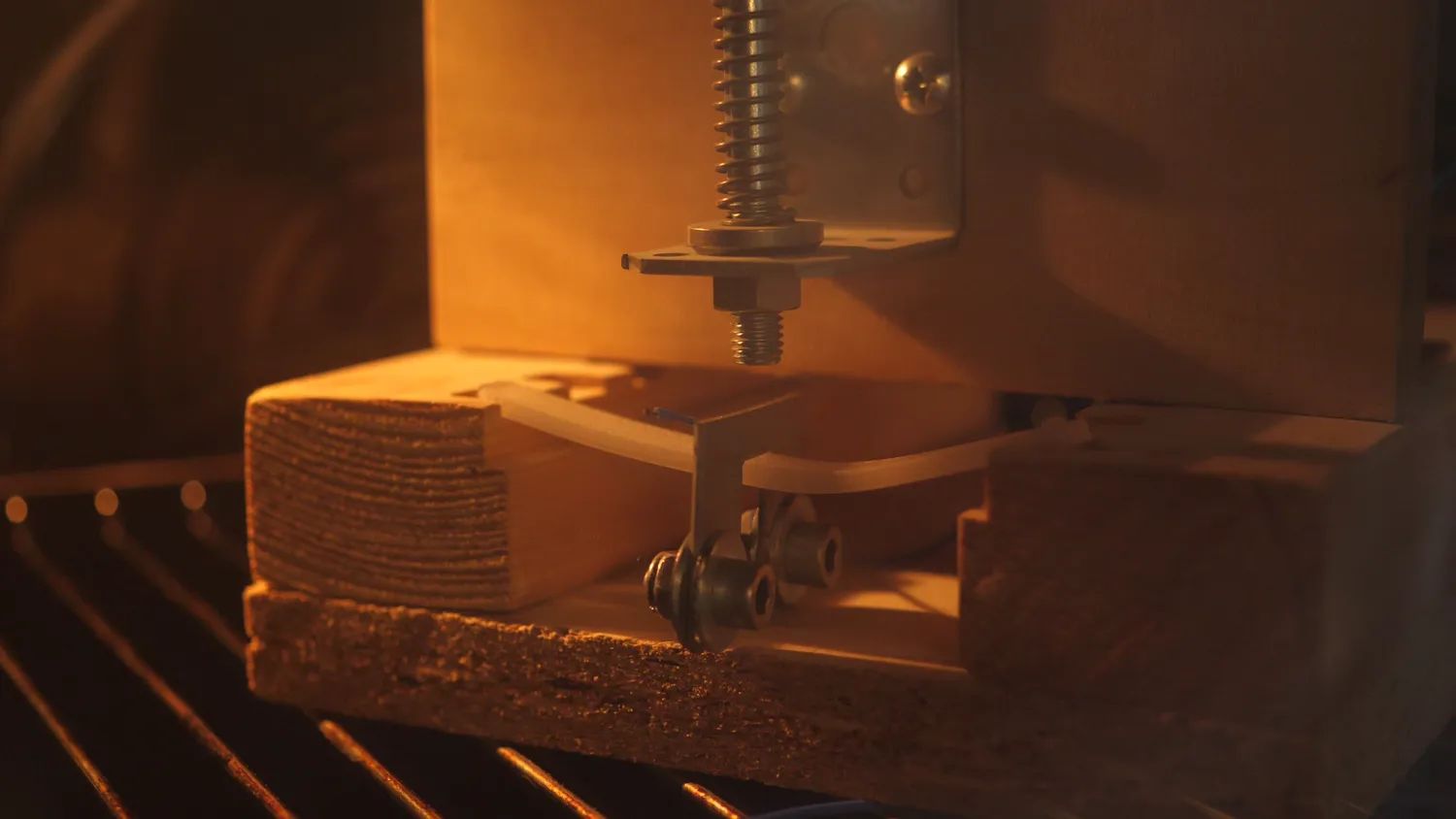
Test sample in the oven
Material performance comparison:
So is PCTG worth it?
And there we have it! Is PCTG the new wonder-material? No but still a bit yes. I wasn’t able to reproduce the perfect isotropic properties of this material claimed by some, though still, in terms of layer adhesion the material basically outperformed almost anything else which does still make it very usable in technical applications together with the high impact strength. I heared from others that they had problems with brittleness and bad layer adhesion, so make sure to keep the material very dry, print as hot as possible and with very little to no cooling. Printability, if your Hotend can handle it, was awesome, with very nice and shiny surfaces, nice overhangs and bridges with only a bit of stringing. In the end, it is in almost any way a better material than PETG while still retaining a reasonable price. I personally enjoyed working with this material and see it as an easier to use alternative to Nylon or pure Polycarbonate and honestly don’t know why there aren’t that many other PCTG filaments out in the wild. But what’s your opinion. Where do you see the applications for this material and would you consider buying a roll for your next project?
Test samples and methods: https://www.patreon.com/posts/filament-test-16238656
🛒 Equipment used for this article:
Essentium PCTG (US) (Affiliate): https://geni.us/s7Lv*
Fiberlogy PCTG (EU) (Affiliate): https://geni.us/5AuFkEU*
Fiberthree Drybox (Affiliate): https://geni.us/nmABUr*
Original Prusa MK3 (Affiliate): https://geni.us/CNCKPrusa*
Prusament* PCBlend (Affiliate): https://geni.us/pjNAHO*
Voron 0: https://www.cnckitchen.com/blog/the-voron-0-a-mini-fast-amp-awesome-core-xy-3d-printer
DISCLAIMER: None of these tests have been performed with calibrated or verified test equipment. The results are for entertainment purposes only! Inform yourself!
* Links marked with an asterisk are affiliate links — if you buy through them, I earn a small commission at no extra cost to you. As an Amazon Associate I earn from qualifying purchases. Thanks for supporting my work!